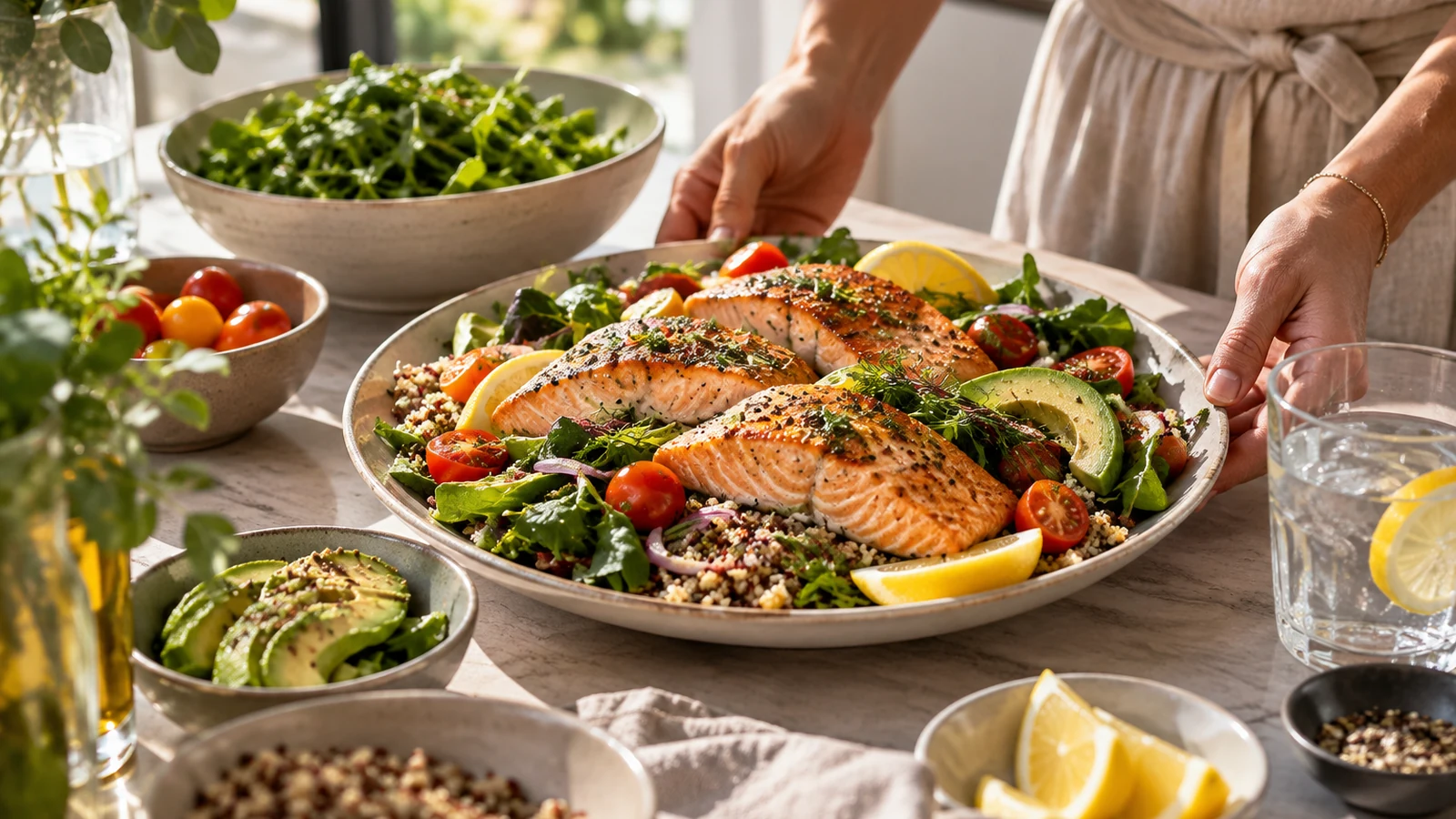
Eating well during a busy week usually fails for practical reasons, not because people do not know what a balanced meal looks like. The useful question is not “What should I cook?” but “What can I make quickly from what is already ready?”
Prepare components instead of five complete meals
Cook one grain or starch, prepare a protein, wash or roast vegetables, and keep one flavorful sauce or dressing ready. Those pieces can become bowls, wraps, salads, or quick dinners without forcing you to eat the same plate every day.
Keep two emergency meals
Choose a couple of meals made from ingredients that are easy to store: eggs and toast, frozen vegetables with rice, soup and bread, or another combination that fits your routine. An emergency meal prevents a hectic evening from becoming a complicated decision.
Make the easiest option visible
Put ready-to-eat fruit, yogurt, chopped vegetables, or leftovers where you will see them first. Food that is washed, portioned, or already cooked is more likely to become the convenient choice.
Use one flexible shopping list
Instead of planning seven exact dinners, shop by categories: a few proteins, vegetables, fruit, a grain or bread, quick breakfast items, and one or two flavor boosters. This gives you enough structure without locking the week into a rigid menu.
Cook once, change the flavor
The same roasted vegetables or chicken can feel completely different with lemon and herbs, a tomato-based sauce, or a different grain. Variety often comes from seasoning and assembly rather than cooking from scratch again.
Leave space for convenience
Prewashed greens, frozen vegetables, canned beans, rotisserie chicken, or other shortcuts can be useful tools. A system that only works when you have an hour to cook is not a busy-week system.
The aim is a kitchen that makes a decent meal the path of least resistance.